





Games to play for dementia patients are simple, familiar activities that can help your loved one feel included, calm, and connected, especially when the game uses music, photos, sorting, gentle movement, or conversation without pressure to remember complicated rules or win.
At Our Cottage in Plano, families can explore supportive options such as Memory Care, Assisted Living, and Respite Care. The goal is to choose activities that feel natural, easy to adjust, and meaningful for the person’s current needs.
What Are Games to Play for Dementia Patients?
Games for dementia patients are low-pressure activities that encourage engagement through familiar objects, music, images, movement, or conversation. They work best when they are easy to follow, flexible, and focused on comfort rather than performance.
These activities can support the connection between caregivers, family members, and loved ones with memory loss. The Alzheimer’s Association activity guidance encourages caregivers to match activities to the person’s abilities and focus on enjoyment, not achievement. The Alzheimer’s Facts and Figures report also notes that more than 7 million Americans are living with Alzheimer’s, which is one reason many families look for simple ways to support daily engagement.
Why Familiar Activities Often Work Better Than Complex Games
Familiar activities often feel easier because they build on routines, memories, and interests your loved one may already recognize. A favorite song, a family photo, or a simple sorting task can feel more reassuring than a new game with many rules.

Care assessment
How to Choose the Right Game for Your Loved One
The right game is the one your loved one can enjoy without feeling rushed or corrected. Start with what already feels familiar, then adjust the activity based on mood, energy, and attention span.
A simple caregiver check can help you choose:
- Pick one clear activity at a time.
- Use familiar songs, photos, colors, or objects.
- Keep the session short and relaxed.
- Pause or simplify if frustration appears.
If your loved one struggles with a puzzle, use fewer pieces or switch to a photo activity. The goal is not to complete the game perfectly. The goal is to create a calm moment of connection.
Simple Games for Dementia Patients by Activity Type
Simple games for dementia patients are easiest to use when they match the person’s comfort level. This table can help you choose activities based on the kind of engagement you want to encourage.
| Game or Activity | Best For | Why It May Help | Caregiver Tip |
| Picture matching | Recognition and conversation | Familiar images can spark a connection | Use large, clear pictures |
| Sorting by color or shape | Focus and repetition | Simple patterns can feel calming | Keep items limited |
| Music guessing games | Memory and emotion | Familiar songs may encourage response | Choose songs they know |
| Simple puzzles | Gentle mental engagement | Larger pieces reduce frustration | Start with fewer pieces |
| Conversation prompts | Social connection | One question can start a memory | Ask slowly and kindly |
| Softball toss | Light movement | Gentle motion can add energy | Keep the pace easy |
Free and Easy Activity Options Families Can Use at Home
Free games for dementia patients can be simple, easy-access activities that support daily routines without needing a complicated setup. Printable matching sheets, large-print word activities, coloring pages, and conversation cards can be used at the kitchen table, in a living room, or during a quiet part of the day.
For families searching for free online games for dementia patients without downloading, choose simple browser-based games with clear visuals and minimal distractions. Free dementia games apps may also help, but they should be easy to use and guided by a caregiver when needed.
Interactive Games for Dementia Patients During Family Visits
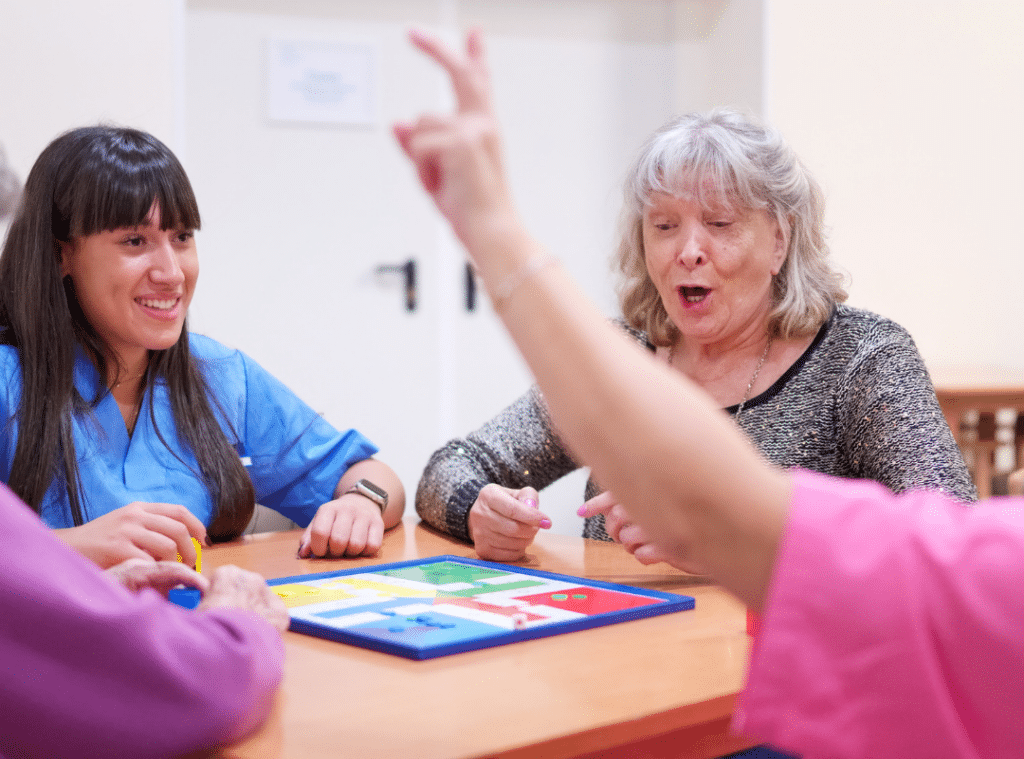
Interactive games for dementia patients can make family visits feel more natural and less pressured. A short music game, photo activity, or gentle conversation prompt can help you connect without expecting your loved one to remember every detail.
At Our Cottage, family visits may feel more relaxed in spaces designed for comfort, including private dining or living areas, home-like common areas, and outdoor spaces such as porches and secure garden areas. Families can learn more about these features on the amenities page.
Activities for Dementia Patients at Home vs. in Memory Care
Activities for dementia patients at home can work well when your loved one responds to familiar routines and family support. The Alzheimer’s Association daily care plan recommends considering likes, strengths, abilities, interests, and the best time of day when planning activities.
At Home
At home, keep activities short and flexible. If your loved one seems tired, choose something quiet, such as music, coloring, or looking through photos. If they seem restless, a gentle movement activity may feel better.
In Memory Care
Families who are comparing care options may also want to review memory care requirements and the cost of assisted living in Texas. These resources can help you understand when daily support may be needed, what questions to ask, and how care costs may vary based on a loved one’s needs.

101 Things to Do With Dementia Patients: How to Build a Simple Activity List
A helpful list of 101 things to do with dementia patients starts with categories, not pressure to create a perfect plan. Choose ideas that match your loved one’s past interests, current energy, and comfort level.
Start with a few simple categories:
- Music and familiar songs
- Family photos and conversation
- Sorting, folding, or light household routines
- Coloring and printable activities
- Outdoor time in a calm setting
You can rotate these ideas throughout the week. Repeating the same activity is fine if it feels reassuring and familiar.
How Our Cottage Supports Meaningful Daily Engagement
Our Cottage supports residents through Assisted Living, Memory Care, and Respite Care in Plano, Texas, with locations on Ambrosia Lane, Aylesbury Lane, and Diane Dr. These settings are designed to feel personal and supportive for adults who benefit from daily living support and memory-focused routines.
Relevant amenities include comfort-focused design, outdoor spaces, home-like common areas, accessible bathrooms, dining and nutrition, wellness and life enrichment, and home services and personal care. Families can also explore floor plans and living options or take the Care Assessment when learning what setting may feel right for a loved one.
Free Printable Activity Sheet for Dementia Patients
If you are looking for simple ways to support your loved one at home, this free printable activity sheet offers easy games, conversation prompts, and a weekly activity planner for dementia care. It is designed to help families create calm, familiar moments without adding pressure to the day.
You can use it to plan music activities, photo prompts, sorting tasks, coloring ideas, gentle movement, and short conversation starters that can be adjusted based on mood, energy, and comfort level.
Download the Free Activity Sheet PDF
For more personalized guidance, you can also take the Care Assessment to think through what kind of support may fit your loved one’s current needs.
See How Our Cottage Keeps Residents Meaningfully Engaged
The best games for dementia patients are simple, familiar, and easy to adjust. Whether you are using music, sorting, photos, printable activities, or quiet conversation, the most meaningful activity is one that helps your loved one feel calm, included, and respected.
Want to see how we keep residents with dementia meaningfully engaged every day? Take a virtual tour of Our Cottage at Fiddler’s Green to see how a home-like setting, daily support, and comfortable shared spaces can help residents feel more connected.
If your family is exploring Memory Care, Assisted Living, or Respite Care, you can also schedule a tour or contact the Our Cottage team to talk through next steps.
Lifestyle Assessment
Frequently Asked Questions
What kind of games are best for dementia?
The best games for dementia are simple, familiar, and low-pressure. Picture matching, music games, sorting activities, simple puzzles, and conversation prompts are often good choices. These activities should be easy to pause, repeat, or simplify. The main goal is connection, not competition.
What are fun activities for dementia patients?
Fun activities for dementia patients can include music, coloring, photo sharing, sorting, simple games, outdoor time, and gentle household routines. The best activity depends on the person’s interests and energy level. Familiar activities often feel more enjoyable than brand-new ones. Keep the pace calm and adjust the activity as needed.
What are the 7 A’s of dementia?
The 7 A’s of dementia are often used as a caregiver education phrase for common changes that may affect memory, communication, awareness, recognition, movement, mood, and perception. The exact wording can vary by source, so it should not be treated as a diagnosis checklist. Families should focus on what they are seeing day to day, such as changes in speech, behavior, attention, or comfort. If you notice new or sudden changes, talk with a qualified healthcare professional.
How to calm someone with dementia?
You can help calm someone with dementia by reducing noise, simplifying the space, and speaking in a gentle voice. A familiar activity, quiet music, or a meaningful photo may help create a sense of comfort. Keep choices simple and avoid rushing the person. For behavior-related care decisions, families may also find this resource for care homes for aggressive dementia patients useful. If distress continues or becomes unsafe, contact a qualified healthcare professional.